Bed Bug Heat Treatment: A Step-by-Step Guide to Complete Eradication
Bed bug infestations can create significant distress in a home. Heat-based therapy is a reliable technique for removing these pests successfully. This strategy necessitates meticulous organization and application to secure positive results. Knowing the stages of the process is critical for residents. What can homeowners anticipate throughout this procedure? The following sections outline essential preparations and strategies to maintain a bed bug-free environment, providing a clear pathway toward resolution.
Bed Bug Infestation: What to Do Immediately
After identifying a bed bug infestation, prompt action is essential to address the issue. The primary step includes assessing the severity of the infestation. This is achieved through copyrightining typical hiding areas such as furniture crevices, mattresses, and bed frames. Upon confirmation, people should limit the spread by quarantining contaminated items. This involves placing infested linens and garments in sealed plastic bags.
Additionally, you should reduce clutter in the infested area. Doing so reduces available hiding spots and enhances the overall effectiveness of treatment measures. A thorough vacuuming session full details can effectively remove both insects and eggs from affected surfaces, however, discarding the vacuum bag is necessary to prevent reinfestation.
As a final step, getting in touch with a licensed pest control provider is highly encouraged. These experts have the expertise and equipment essential for complete pest removal. Prompt, decisive actions can considerably decrease the severity of the infestation and bring about a more rapid conclusion.
How Heat Treatment Operates to Remove Bed Bugs
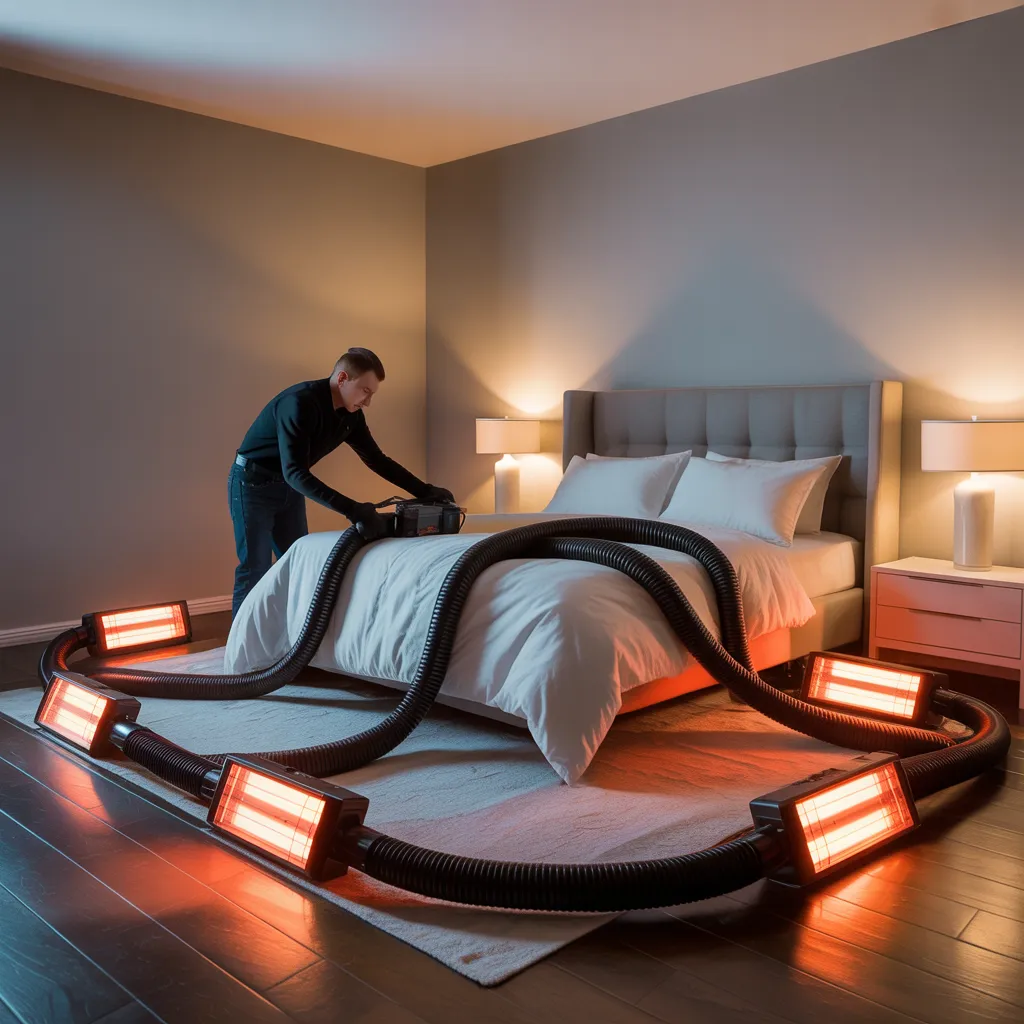
Upon assessing the scope of a bed bug infestation and taking preliminary containment steps, effective treatment options become a priority. Heat treatment stands as one of the most effective approaches to eliminating bed bugs. It involves raising the temperature of infested areas to a lethal level, typically between 120°F and 140°F. Within this temperature range, bed bugs, nymphs, and their eggs are incapable of surviving.
This method generally needs professional-grade tools that moves warm air through the whole room, ensuring consistent temperature coverage. Compared to chemical solutions, warmth seeps into walls, furniture, and other hidden areas where bed bugs may reside. This complete process eradicates bed bugs at every developmental stage during one application.
Given the effectiveness of the treatment, it is essential to confirm that all belongings within the room can endure high temperatures to avoid any damage. This heat treatment not only eradicates active infestations but also assists in preventing future ones by targeting unseen populations.
Vital Preparations for Heat Treatment Success
Effective heat treatment for bed bugs demands thorough preparation to ensure maximum results. Before treatment begins, it is essential to remove clutter from the area to ensure heat reaches all surfaces. All items, especially those with potential bed bug hiding spots, should be removed or treated separately. In addition, washing and drying bed linens, clothes, and curtains using high heat settings can aid in eradicating any insects or eggs found in these items.
Furniture must be positioned away from walls to establish a buffer zone, facilitating proper airflow during treatment. Electronic devices and delicate items must be removed or safeguarded, as excessive heat can damage them. Finally, sealing cracks and crevices will reduce places for bed bugs to hide, boosting the overall efficacy of treatment. These vital steps set the stage for effective eradication and enable a more comprehensive application of heat, ultimately leading to a bed bug-free environment.
What to Expect During Heat Treatment
In the course of bed bug heat treatment, homeowners can anticipate a comprehensive process intended to exterminating these unwanted guests. The process involves raising indoor temperatures to between 120°F and 140°F, thoroughly eliminating all developmental stages of bed bugs, including their eggs. As the heat reaches into carpets, furniture, and concealed areas, homeowners may observe a heated atmosphere throughout the premises.
Homeowners need to anticipate a degree of inconvenience, as the process typically lasts multiple hours to guarantee thorough coverage. Experienced pest management professionals will closely observe heat levels, employing advanced equipment to maintain the required levels. Even though bed bugs may not be visibly apparent right away, the thermal treatment is intended to kill infestations at all stages. It is essential for property owners to remain out of the treated area until it is deemed safe to return, protecting their well-being during this rigorous elimination procedure.
Next Steps for Keeping Your Home Bed Bug-Free
Once heat treatment is complete, ensuring your home remains bed bug-free demands ongoing vigilance. Residents are encouraged to perform periodic copyrightinations, focusing on frequent harborage points such as furniture seams, mattresses, and bed frames. Applying protective covers for mattresses and box springs may reduce the risk of future infestations by sealing in any remaining bugs.
Consistent cleaning is vital; regularly vacuuming and laundering bedding and clothing in hot water will assist in removing any possible eggs or insects. Additionally, reducing clutter around the home minimizes hiding spaces and makes inspections easier.
It is equally important to exercise caution when bringing in second-hand items or luggage, as these can harbor and spread new bed bugs. If any signs of re-infestation appear, a professional pest control service should be contacted immediately. By following these measures, property owners can develop a living space that considerably minimizes the chances of a bed bug recurrence.
Commonly Asked Questions
Is It Possible to Remain in My Home During Heat Treatment?
No, it is typically recommended that occupants vacate the home during heat treatment for bed bugs. The high temperatures required for effective eradication can pose safety risks and discomfort to occupants and pets.
How Long Does Heat Treatment Take to Complete?
Heat treatment generally requires about six to eight hours to finish, depending on the size of the infested area. The treatment works by elevating the temperature to effectively eliminate bed bugs throughout every stage of their life cycle.
What Risks Do My Pets Face During Treatment?
Yes, there are risks to pets during treatment. High temperatures can be harmful; for this reason, it is necessary to relocate pets from the area before the treatment begins and ensure they remain safe until the treated space has cooled.
What to Do if Bed Bugs Come Back After Treatment
When bed bugs come back after treatment, this could suggest incomplete elimination or a fresh infestation. Residents should take a closer look at their living conditions, explore further treatment options, and seek guidance from pest control experts for proven methods to eradicate the returning pests.
What Is the Cost of Bed Bug Heat Treatment?
Bed bug heat treatment generally runs in the range of $1,000 to $2,500, depending on the severity of the infestation and the size of the area being treated. Several other factors can affect the overall cost, such as geographic location and the chosen service provider.